
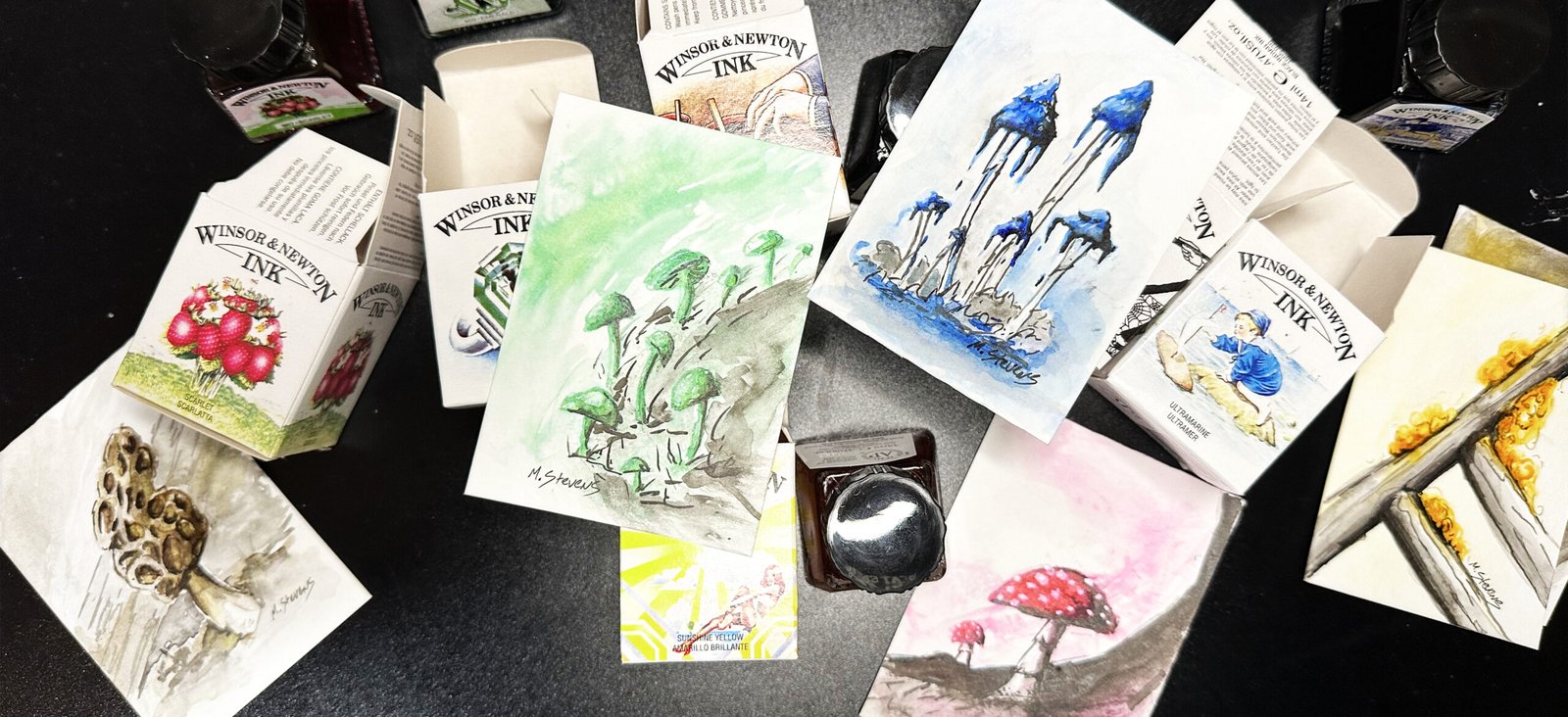
This series began as a small experiment of tiny mushroom paintings, each created as an ACEO card. It quickly grew into something much richer. Each piece explores a different mushroom through different color inks and folklore.
For every painting, I limit myself to a single ink color and black. Working this way pushes me to explore value, texture, and mood rather than relying on a full palette. The constraint keeps the process playful and focused, letting the character of each mushroom come through in subtle ways.
As I paint, I film the process and share a bit of folklore connected to that specific mushroom. Some stories are rooted in regional traditions, others in old beliefs, superstitions, or foraging lore passed down through generations. Mystery, luck, and the danger of hidden worlds naturally weave into the stories and the paintings as well.
The ACEO format keeps everything intimate. These are small works meant to be held close, almost like visual field notes or collected curiosities. Pairing the paintings with short videos allows the work to live in two forms: the quiet, finished piece and the unfolding process that reveals how it came to life.
This series is an ongoing exploration of color, folklore, and the quiet magic found in overlooked details. Each new mushroom adds another small chapter to the collection.
The Fly Agaric:
See the Painting on YouTube!
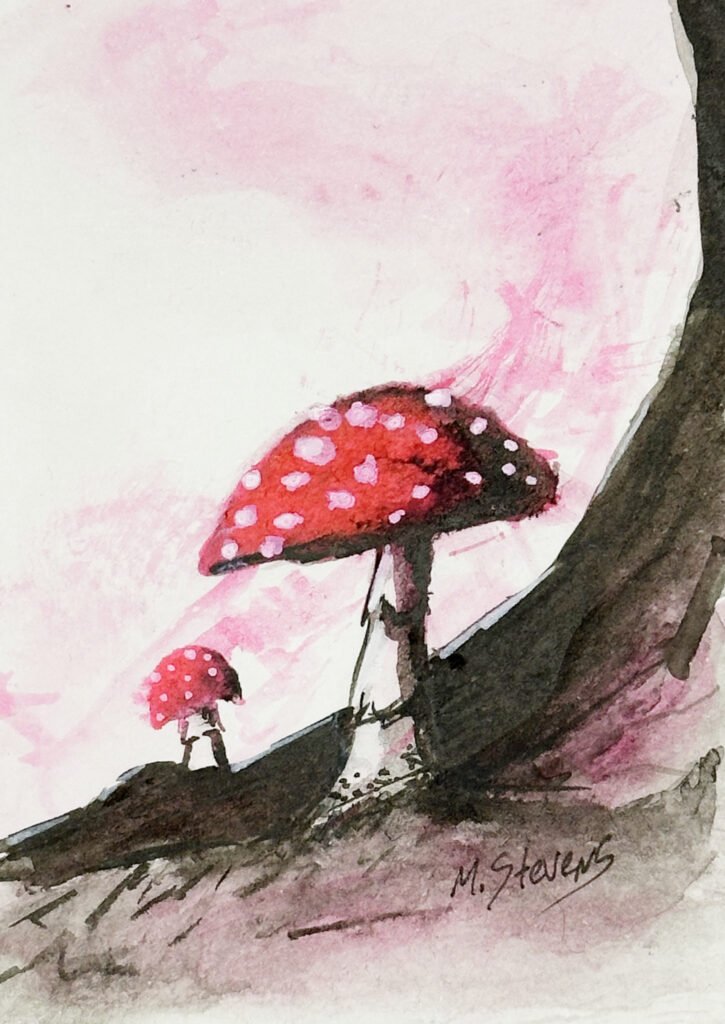
This mushroom was historically used as a fly trap. Pieces were cut and mixed with milk, then set out to attract flies. The sweetness of the milk served as a lure, while the toxins within the mushroom proved fatal.
Winsor & Newton Scarlet ink was used for this painting. When first applied, the ink appeared pale and pink-toned, particularly on wet paper. Through repeated layering, the color slowly deepened into a darker red. The ink blended cleanly with black, allowing for subtle shifts in value. Among the inks tested so far, Scarlet has proven especially effective.
The Ink Cap:
See the Painting on YouTube!
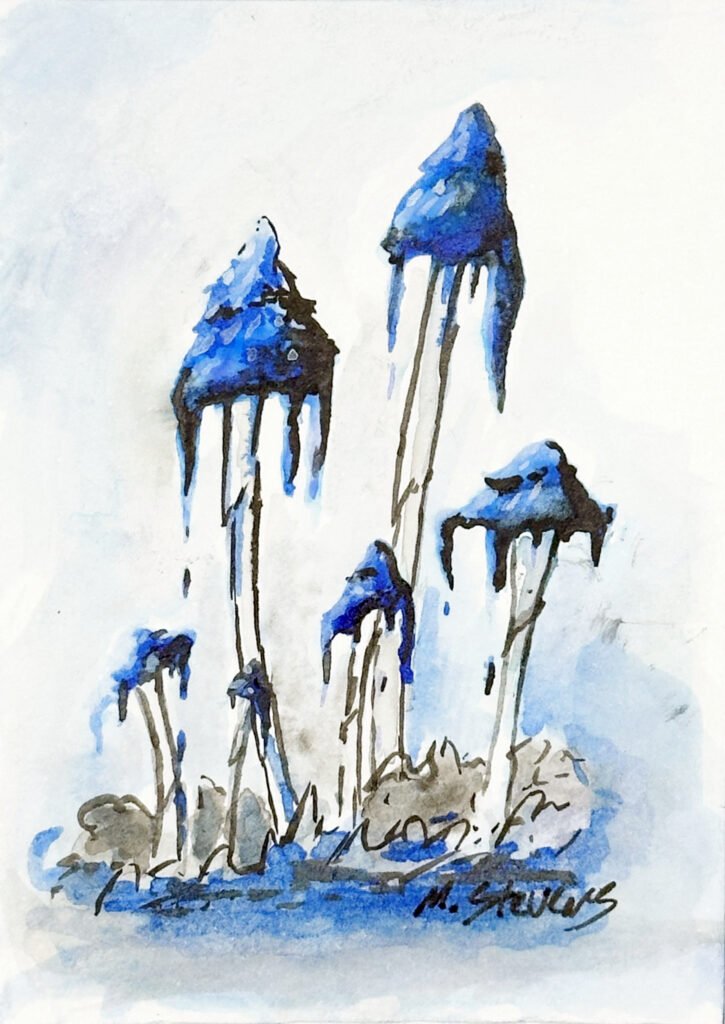
This mushroom is known for its unusual method of decay. As it matures, the cap begins to break down into a dark, ink-like liquid that drips from the gills and returns to the soil. This allows the spores to disperse as the mushroom effectively dissolves itself.
Historically, this liquid was collected and used as a natural ink. It produced a deep, dark tone and was sometimes used for writing and sketching, valued for its richness and organic origin.
Ultramarine ink was used for this painting. The color presents as a deep blue with a muted, almost hidden vibrancy. When layered, it builds into a dark, saturated tone that closely approaches black while retaining a subtle blue undertone. The ink is highly pigmented, stains readily, and produces strong, consistent coverage. It remains one of the more striking and reliable inks used in this series.
The Fairy Ring:
See the Painting on YouTube!
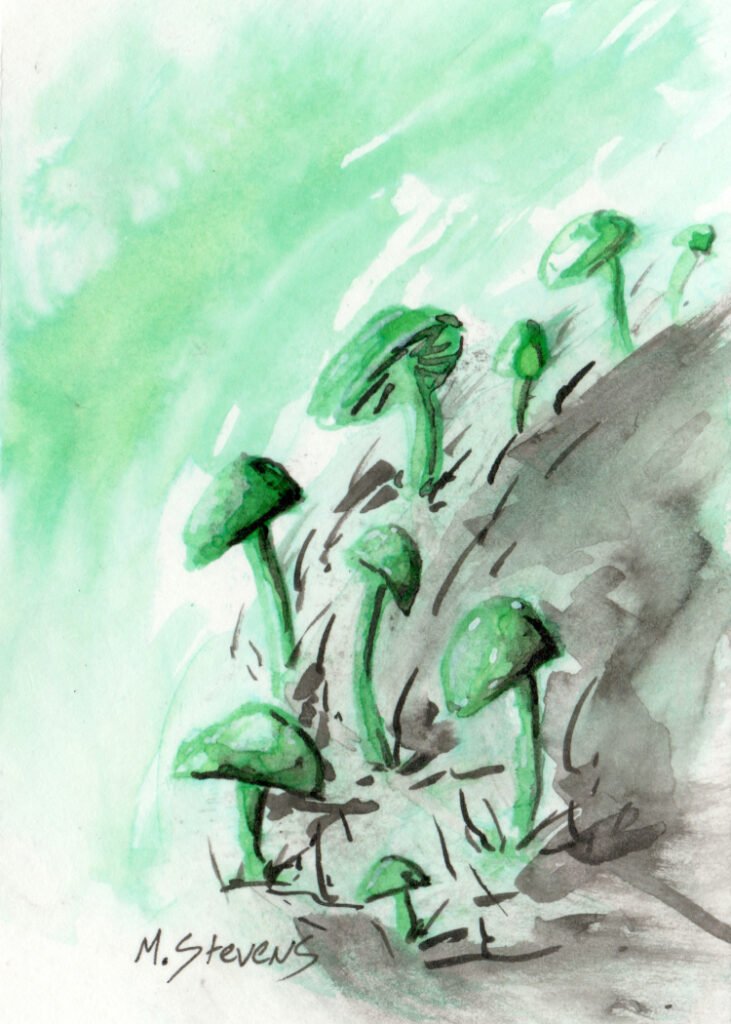
This mushroom is known as the fairy ring. Long ago, it was said that when fairies and elves danced in circles, these mushrooms would grow in the tracks they left behind. The rings were seen as evidence of their presence, marking places where the natural world and the unseen briefly overlapped.
Folklore warns against stepping into a fairy ring. Those who do are said to experience time differently. What feels like moments may pass as hours, or longer. In some tales, entering the ring could even lead to being transported to another realm, with no clear path back.
Emerald ink was used for this painting. The pigment is a rich, saturated green with strong depth. When lifted with a napkin, it leaves behind a softer, slightly yellow-toned, creating natural variation within the wash. The ink also layers cleanly, allowing for deeper greens to build without becoming muddy. Among the inks tested so far, Emerald stands out for its versatility and range
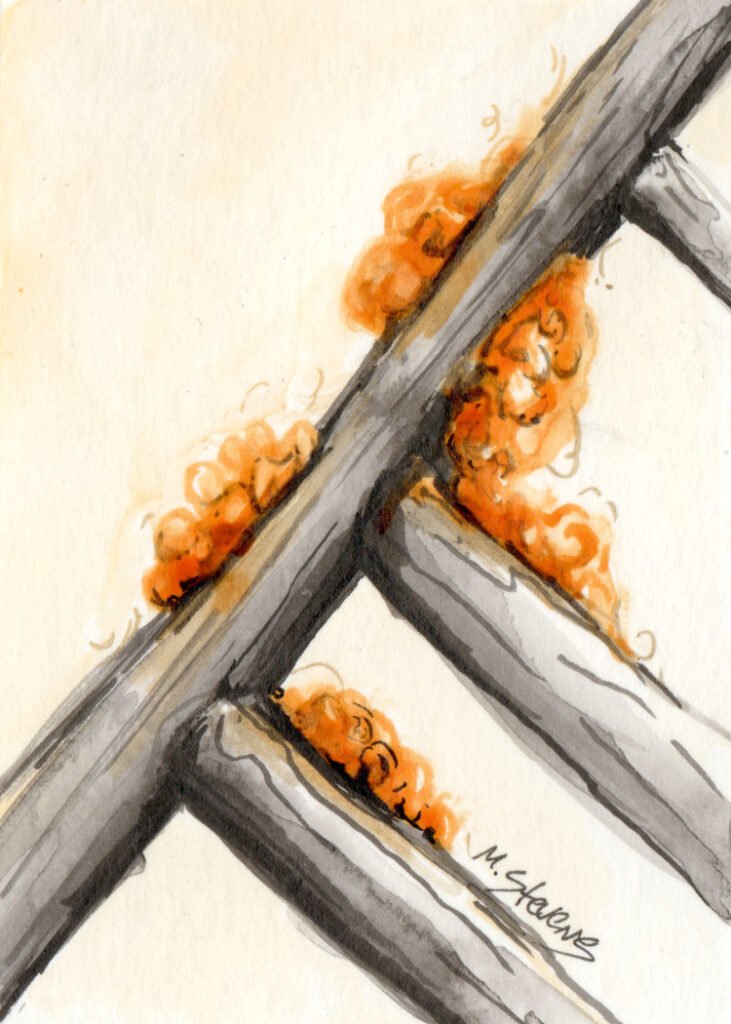
Witch’s Butter:
See the Painting on YouTube!
This mushroom is known as Witch’s Butter. Folklore claims that if this jelly-like fungus appears near your home, on a fence, door, or tree, it is a sign of a mild curse placed by a witch. The curse is not harmful, but it is said to bring small inconveniences and streaks of bad luck. According to legend, the curse can be broken by piercing the fungus with a needle or knife, though it may reappear if the underlying magic remains.
Sunshine Yellow ink was used for this painting, ironically bright for a mushroom associated with bad luck. The pigment is potent and strong, able to sit on top of dark areas or other inks and leave a glowing highlight. I love using it to suggest a kiss of sunlight on the edge of a board, wall, or hillside. It stains beautifully, layering to produce richer tones that shift toward orange with repeated application. It’s a playful, versatile ink that brings warmth and life to even the most ominous of subjects.
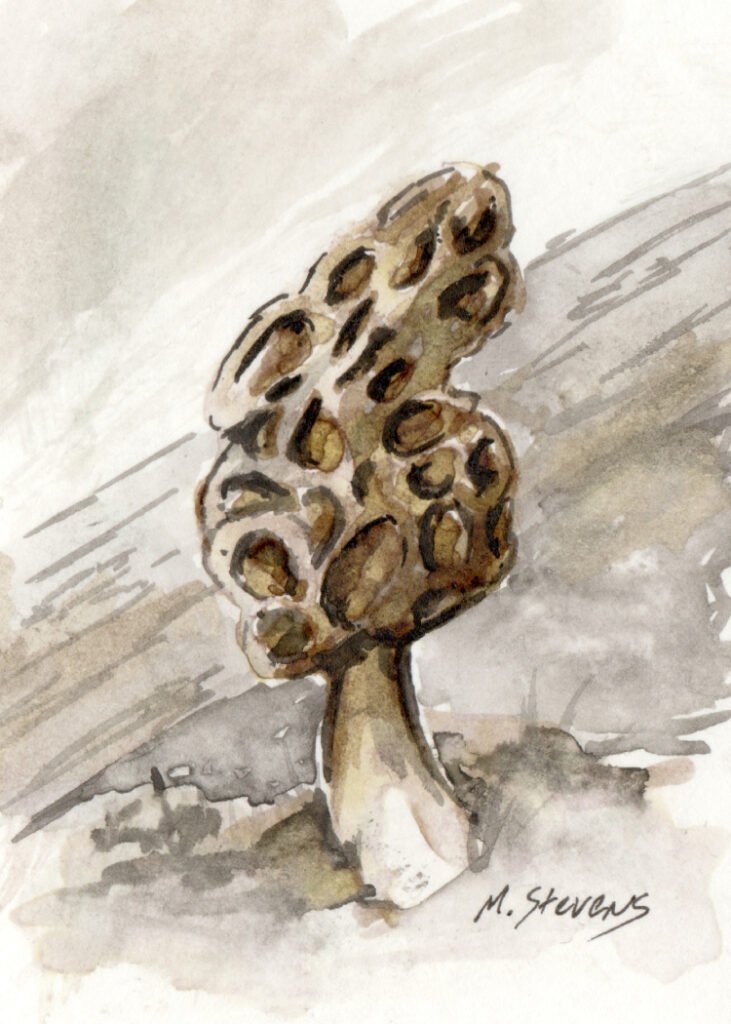
The Morel:
See the Painting on YouTube!
This mushroom is known as the Morel. Legend has it that a family was saved from starvation by a fortunate find of these mushrooms, earning them the nickname “miracle mushroom.” After a long, harsh winter, they discovered a motherlode of morels and were able to eat them through the end of spring, turning what could have been famine into survival.
Traditionally, the locations of these mushrooms are closely guarded secrets. Foragers go out in early spring to find them, and sharing the location is said to risk losing the bounty. Once discovered, the spots are kept hidden and shared only with trusted family or friends.
Peat Brown ink was used for this painting and has quickly become one of my favorites in the series. The pigment blends beautifully with black ink, lifts to leave a warm, textured lighter version of itself, and stains consistently when layered. Its depth and richness are reminiscent of walnut inks favored by the old masters, making it ideal for capturing the earthy tones and intricate textures of the Morel.
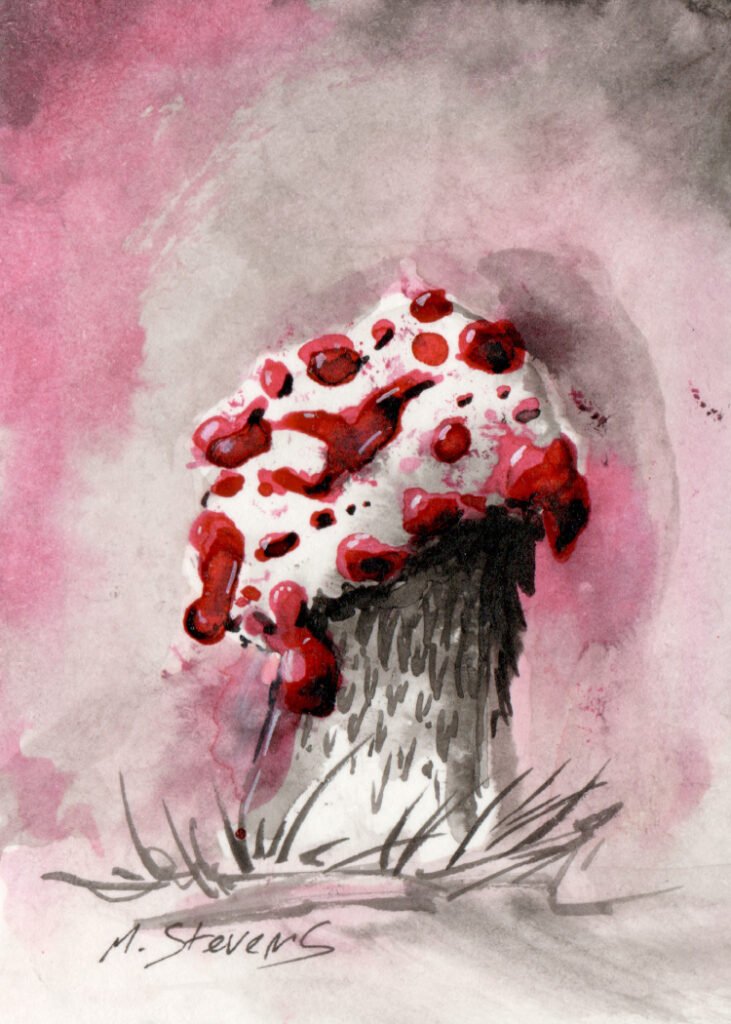
The Devil’s Tooth:
See the Painting on YouTube!
This mushroom is known as the Devil’s Tooth. Folklore warns that finding it near your home is an omen of misfortune, a harbinger of events yet to come. It is also said that tasting the mushroom brings vivid, unsettling dreams that reveal glimpses of what is coming.
Would you dare taste it? Personally, I wouldn’t. A peaceful night’s sleep is far too valuable to risk for curiosity.
Deep Red ink was used for this painting. The pigment is similar to the Scarlet ink used in the first mushroom, but slightly darker and with greater variation when mixed with water or lifted with a paper towel. It can produce bright pink highlights, deep red shadows, and everything in between, leaning a bit less toward magenta than Scarlet. Its rich, blood-like tones make it ideal for capturing the ominous, almost threatening character of the Devil’s Tooth.
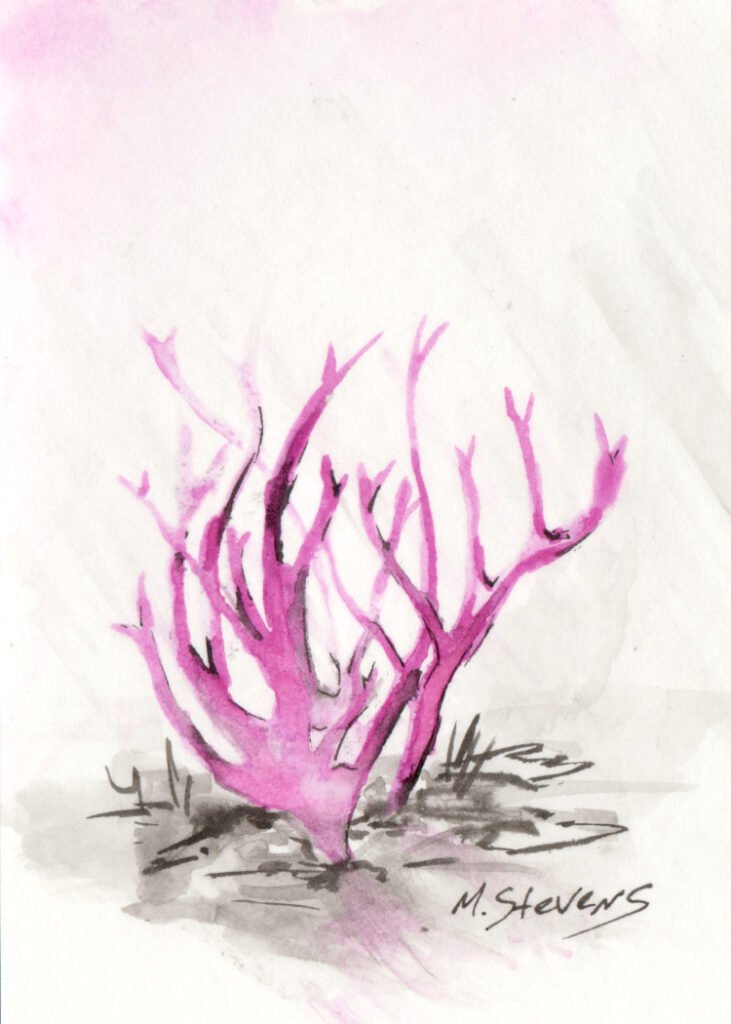
The Purple Coral:
See the Painting on YouTube!
This mushroom is known as the Purple Coral Mushroom. It is rare and considered a marker of mystical activity. According to folklore, discovering this mushroom in the forest means a magical creature has recently passed through the area.
Finding a Purple Coral Mushroom is said to bring enchantment, good fortune, and sometimes even the possibility of love. Those who encounter it are believed to be blessed with a day full of joy and wonder.
Purple ink was used for this painting. While it appears dark and rich in the bottle, on paper it becomes lighter and slightly magenta, almost like printer ink. Despite this, it layered well and blended smoothly with black when needed. I’ve also found it works beautifully when used to tone other colors in later paintings, adding subtle depth and harmony. Though not my favorite ink in the series, it captured the delicate, enchanting feel of this mushroom perfectly.
There are still whispers in the woods, and more mushrooms waiting to be discovered. Keep an eye out for the next additions to the Mushroom series.
Materials Used
Winsor & Newton Drawing Ink – Scarlet (affiliate link)
https://amzn.to/4tm0baN
Hot press watercolor paper 25% Cotton from Hobby Lobby